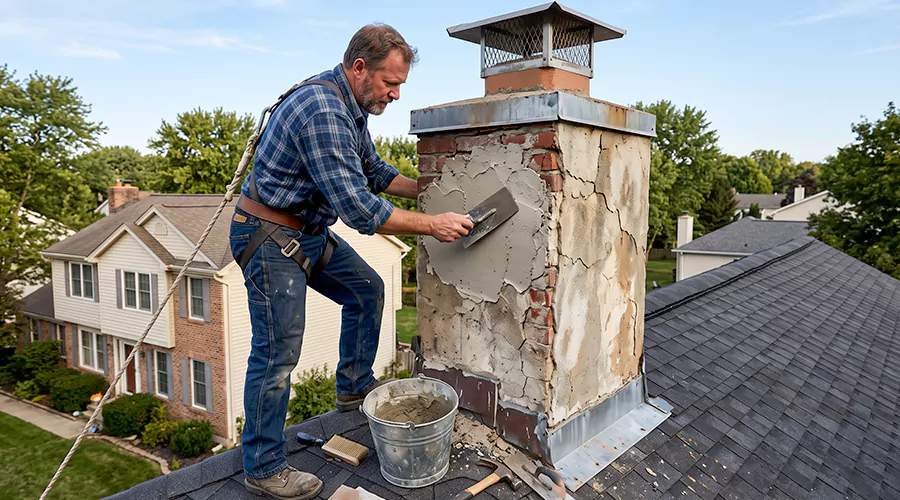
How to Repair a Damaged Chimney Chase
Chimney chases protect the flue system, but water leaks, rust, and rotted framing cause damage. Repairs start by finding the moisture source before replacing materials.




Based on 500+ Reviews

Proudly American
Owned & Operated
A chimney chase protects the chimney structure from weather, moisture, and outdoor elements. Unlike traditional masonry chimneys, many modern homes use chimney chases made from wood framing covered with materials such as metal, siding, or other protective finishes.
When a chimney chase becomes damaged, it can allow water to enter the home, damage the chimney system, and affect nearby walls, ceilings, and insulation. Repairing a damaged chimney chase usually involves identifying the source of the damage, fixing structural problems, and restoring proper weather protection.
A chimney chase is a protective enclosure built around a chimney pipe or flue system.
It helps:
Chimney chases are commonly found on homes with:
A chimney chase can become damaged because of:
The type of damage determines the correct repair method.
Common warning signs include:
These signs often indicate that moisture is entering the chimney chase.
Before repairing a chimney chase, the cause of the problem should be identified.
A proper inspection should check:
Repairing only visible damage without fixing the source of moisture can lead to repeated problems.
The chase cover is the top surface that protects the chimney chase from rain and snow. A damaged chase cover can allow water to enter.
Common chase cover problems include:
Repair options may include:
A properly installed chase cover should direct water away from the chimney.
Water leaks can damage the wood structure inside the chase.
Damaged wood may show:
Repair may involve:
Structural repairs are important because weakened framing can affect chimney stability.
The exterior covering of a chimney chase protects the internal structure.
Damage may include:
Repair may involve:
The replacement material should match the existing exterior and provide proper moisture protection.
Flashing creates a waterproof barrier where the chimney meets the roof. Damaged flashing can allow water to enter the chase.
Common flashing problems include:
Repairing flashing helps prevent future leaks.
Small openings around the chimney chase can allow moisture and air infiltration.
Common problem areas include:
Proper exterior-grade sealants can help close small gaps.
However, sealing alone may not solve problems caused by damaged materials or structural issues.
Some chimney chases require ventilation to reduce moisture buildup.
Poor ventilation can contribute to:
Proper ventilation helps control moisture inside the chase.
Metal chimney chase parts can rust because of:
Rust repair may include:
Extensive rust may require component replacement.
Yes. A damaged chimney chase is a common source of water intrusion.
Water may enter through:
Water leaks should be repaired quickly because moisture can damage interior structures.
The cost of repairing a chimney chase depends on the extent of damage.
Typical cost factors include:
Minor repairs may involve sealing and small repairs, while major damage may require rebuilding sections of the chase.
Some minor maintenance tasks may be possible, such as:
However, professional repair may be needed for:
Incorrect repairs can allow moisture to continue entering the structure.
Regular maintenance can help protect a chimney chase.
Helpful steps include:
Preventing water entry is one of the best ways to extend the life of a chimney chase.
Professional inspection is recommended when:
A professional can determine whether the chase needs repair, replacement, or rebuilding.
A damaged chimney chase can lead to water leaks, structural deterioration, and chimney system problems if it is not repaired properly. Common repairs include replacing damaged chase covers, repairing siding, fixing flashing, sealing gaps, and restoring damaged framing.
The most important step is identifying the source of damage before making repairs. Regular inspections and proper weather protection can help prevent chimney chase problems and keep the fireplace system protected.
Common causes include water leaks, rust, storm damage, damaged covers, poor flashing, and deteriorating exterior materials.
Signs include water stains, damaged siding, rust, soft wood, and moisture around the fireplace.
Yes. Repairs may include replacing covers, fixing siding, repairing flashing, and restoring damaged framing.
A chase cover protects the chimney opening from rain, snow, and debris while directing water away from the structure.
Regular chimney inspections help identify damage early and prevent larger moisture problems.
Yes. Damaged materials can often be replaced, but the source of the water leak must also be corrected.
Chimney chases protect the flue system, but water leaks, rust, and rotted framing cause damage. Repairs start by finding the moisture source before replacing materials.
